WAR IN THE MIDDLE EAST AND THE MESSIANIC SPIRIT
Pubblicato da 21 marzo 2026
The war in the Middle East is raging and spreading more and more: as with all wars, we do not know how it will end. However, by considering the aims of the war and the forces involved, we can foresee not the immediate outcomes of this or that military episode, but the final result toward which events are moving.
The conflict originated and has persisted for 80 years, since the creation of the State of Israel, which was not accepted by the Arabs, who believed they could easily destroy the new state sanctioned by the UN. Since then, wars and clashes have been repeated, from the initial one in ’47 up to the present day, always at the expense of the Arabs. Gradually, the unity of the Arab world has broken down into divisions and conflicts. The fundamental defection was that of Egypt, the most important country, which under Sadat recognized Israel in 1978 and withdrew from the struggle. Subsequently, the other countries also stepped aside. However, in Gaza, led (dominated?) by HAMAS, the dream of the liberation of Palestine from the Jews remains; but the only state that still supports it is Iran of the ayatollahs and its proxies: Hezbollah in Lebanon and the Houthis, who now also seem to have stepped back.
It is not even true that all Islamic fundamentalists are always against Israel: for example, the Gulf States are, it seems to me, more fundamentalist than the Iranians, yet they have abandoned any plan to annihilate Israel and now, one could say, almost fight alongside Israel.
In fact, October 7 clearly had the aim of derailing the Abraham Accords, that is, the Arab recognition of Israel.
Now let us look at the forces in the field.
Israel is a prosperous and strong state and also possesses nuclear weapons; moreover, Western countries would not allow a second Shoah, and above all the United States, the strongest and most powerful country on the planet, supports it in an almost unconditional way, as if it were part of itself.
HAMAS has only militias with light weapons; the same can be said of Hezbollah and the Houthis.
Iran, on the other hand, is a country in deep economic crisis, torn by internal conflicts.
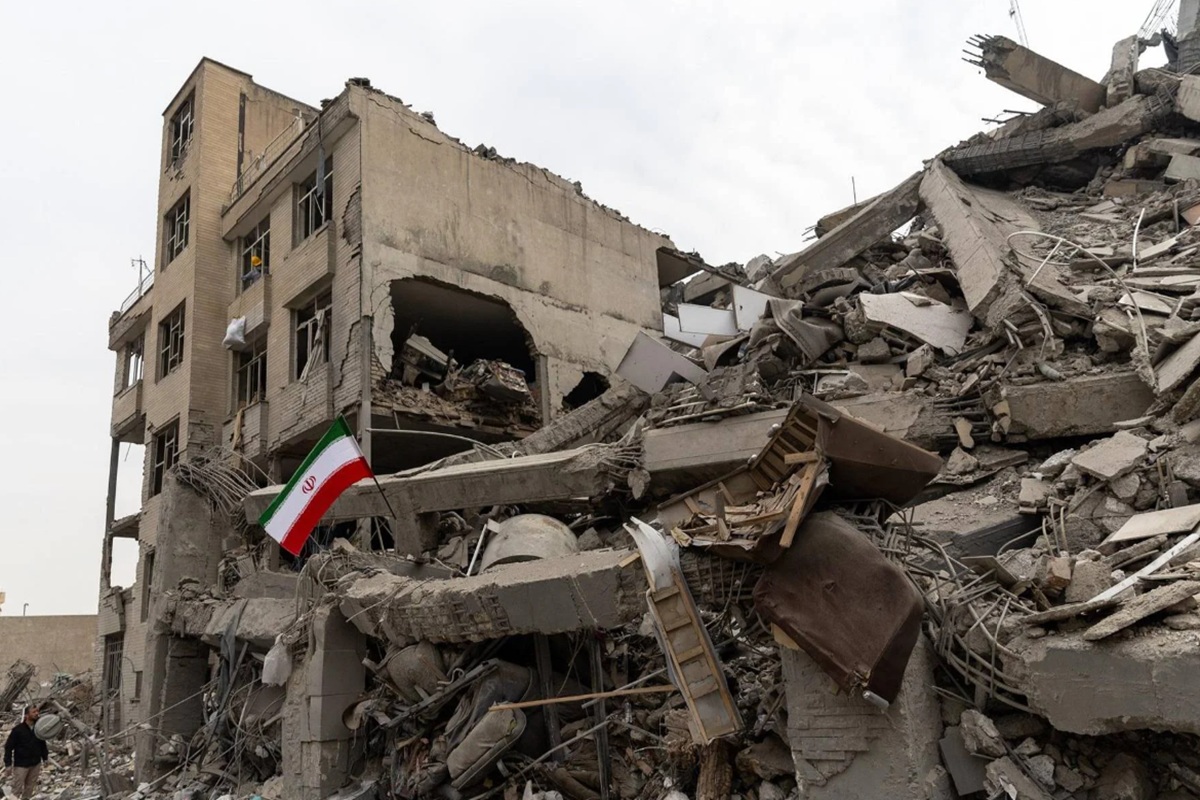
If we consider the forces in the field, the conclusion is that Israel will certainly not be overwhelmed and annihilated. In every clash we see the devastation that falls upon Israel’s enemies, which in recent times have increasingly become real catastrophes: Gaza has been destroyed, with perhaps 70,000 dead, yet HAMAS does not disarm; Hezbollah, already defeated last year, has now resumed launching missiles against Israel, and a new Gaza is looming in their territories in Lebanon, from which the entire Shiite population is fleeing in despair.
Iran would be a country with many resources and also good capabilities, but sanctions and continuous direct and indirect conflicts have undermined its economy, and it is in the grip of a major internal struggle.
At present, Iran, in a war against the USA, Israel, and the Emirates, might even win, but it would certainly lose much of its economic and energy infrastructure, suffer heavy damage and enormous casualties: its economy would deteriorate even further.
So are the fighters against Israel, such as the ayatollahs, mad?
We do not believe so: this is a deep conviction of a religious nature. They believe that the outcome of wars does not depend on the forces in the field but on the will of God, and therefore, if they prove themselves worthy, God will grant them victory. They do not see the conflict, as we Westerners do, as a matter concerning a small strip of land to be reconquered (liberated from invaders), but as a metaphysical conflict in which believers fight against Western unbelievers, of whom, as they always repeat, Israel is only the spearhead, the servants, as Nasrallah used to say.
The explanation for the behavior of the ayatollahs therefore lies in the messianic spirit that is currently driving Iran and HAMAS, and which is also circulating, albeit underground, among Arab masses, and which has erupted in the various fundamentalisms of our time, from Bin Laden to the attack on the Twin Towers, to the tragedy of ISIS (Islamic Emirate).
On the other hand, the messianic spirit does not exist only in the Muslim world. It is also present today and is growing in Israel itself. The so-called Haredim likewise believe they are invested by God with a messianic mission, with the right (or rather the duty) to possess all of Palestine, and that one day the Israelites, the chosen people, will guide all nations toward the will of God.
They renew the ancient spirit that led the Jews to rebel against the Romans.
Jerusalem was besieged, starved, and then destroyed by the Romans. The Jews were massacred, enslaved, and expelled from Palestine. We know these terrible events well because they were described in detail by the Jewish historian Josephus.
There was then a second and a third revolt under Hadrian, all ending in general massacre.
Why did the Jews continue to rebel against the Romans when it was so clear they would be defeated and slaughtered? The answer is that they believed victory did not depend on the forces in the field but on Yahweh, to the point that it was even forbidden to count one’s own fighters.
This is the same phenomenon (in reverse) that we see today: why do Hamas and then the ayatollahs believe they can win and destroy Israel? They believe that victory depends on Allah (insh’Allah) and that He will grant it to the believers if they remain truly Islamic, which means surrender to the will of God.
Even in America there are evangelical groups that draw heavily on the Old Testament and feel invested with a divine mission. Even Trump, who does not seem to me a believer, may actually think he answers only to God for what he does.
Here, instead, Catholicism largely sets aside the Bible and draws inspiration from the Gospels. Thus, for example, Deus Sabaoth is no longer translated as “God of armies,” but as “God of the universe.”
We no longer think that we are invested with a divine mission or that God guides our armies.
Yet the messianic spirit often appears in history, not only among the Jews of antiquity and today’s Islamic fundamentalists.
One might recall the Deus vult of the Crusaders, and that the defeat of the Crusaders at Hattin was due precisely to this illusion: they did not consider the forces in the field but only God’s help, and they were massacred and lost the Holy Land forever.
Even more strangely, even atheists are sometimes seized by this messianic sense: for example, the Nazis had the motto Gott mit uns (God is with us) and continued to fight even when the war was clearly lost because they believed their destiny (but what is it?) was to conquer the world.
This, it seems to me, is the point to understand, without which we Westerners, distant from this messianic spirit, cannot understand the crises of the Middle East—not only the one involving Israel, but many other events in those countries.